New York City
A Brief History and Guide

A Fascinating History of New York City in Brief
From a Wild Island to the Capital of the World
1. The Beginning: The Island of Many Hills (Before 1626)
Long before Europeans arrived, the area was inhabited by the Lenape, an Indigenous people belonging to the broader Algonquian linguistic family.
They called the island Manna-hata, meaning “island of many hills.” At the time, it was a densely forested landscape filled with wildlife and streams.
2. Dutch Manhattan (1626)
In 1626, Peter Minuit was associated with the Dutch acquisition of Manhattan from its Indigenous inhabitants. The familiar story of a purchase for $24 is a simplified and disputed account.
The Dutch established New Amsterdam, a trading settlement whose commercial character helped shape the future city.
Wall Street follows approximately the route of a defensive wall built during the Dutch colonial period.
3. British Rule and the Birth of New York (1664)
In 1664, an English fleet arrived at New Amsterdam, and the Dutch surrendered the settlement.
The English renamed it New York in honor of the Duke of York, the king’s brother.
4. Independence and Explosive Growth
The United States declared independence on July 4, 1776.
New York briefly served as the nation’s capital, and George Washington took the presidential oath of office here in 1789.
In 1811, the Commissioners’ Plan established the famous Manhattan street grid.
In 1898, the consolidation of five boroughs created the modern City of New York.
5. Gateway to America and the Age of Skyscrapers
Millions of immigrants arrived in New York, including many from Poland, helping transform the city into one of the world’s great cultural centers.
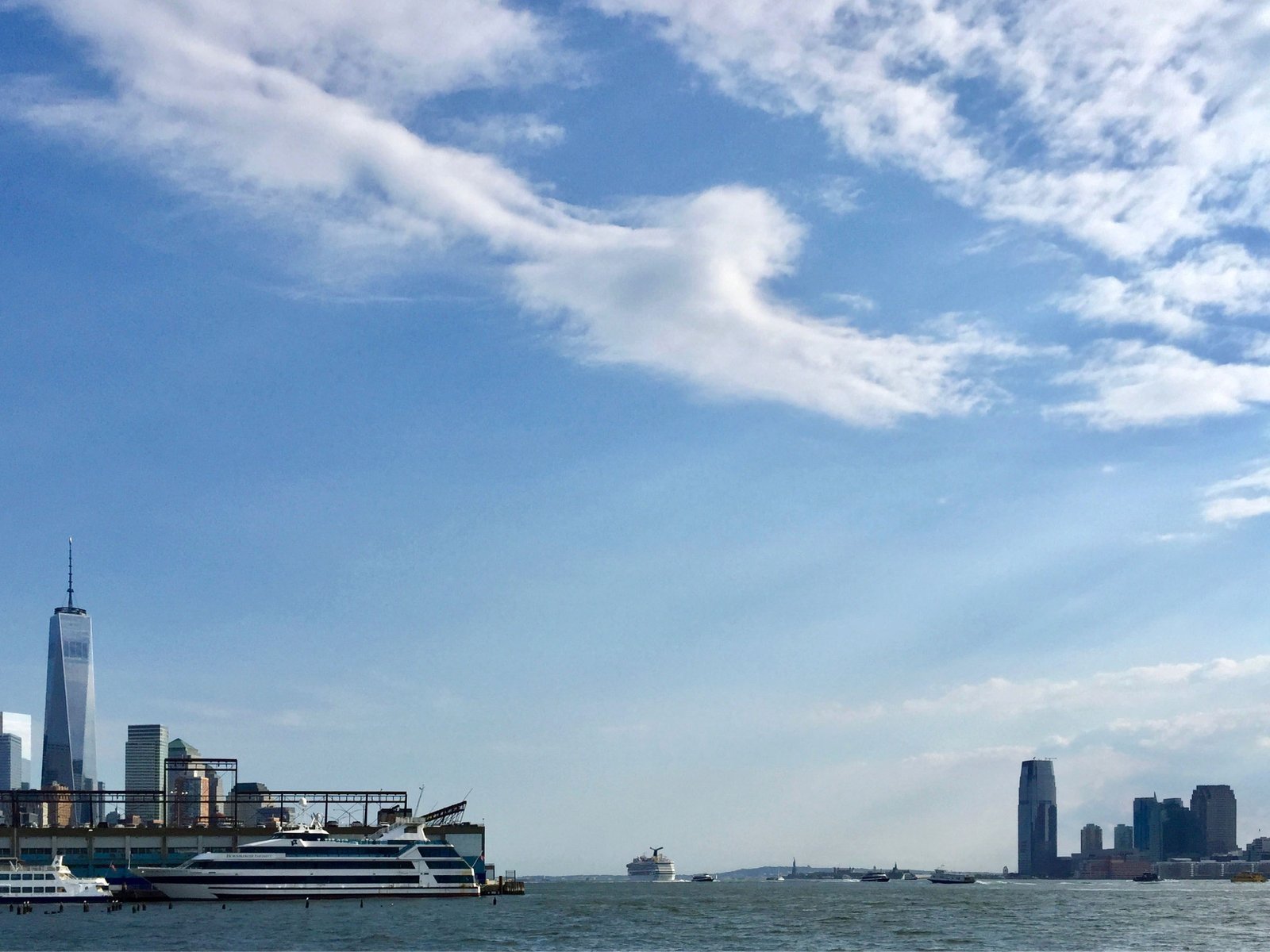
The early twentieth century brought extraordinary skyscrapers, including the Chrysler Building and Empire State Building.
6. Modern New York: Decline, Renewal, and Reinvention
The 1970s and 1980s were difficult decades, marked by financial troubles, crime, and urban decline.
New York subsequently underwent substantial changes and renewal.
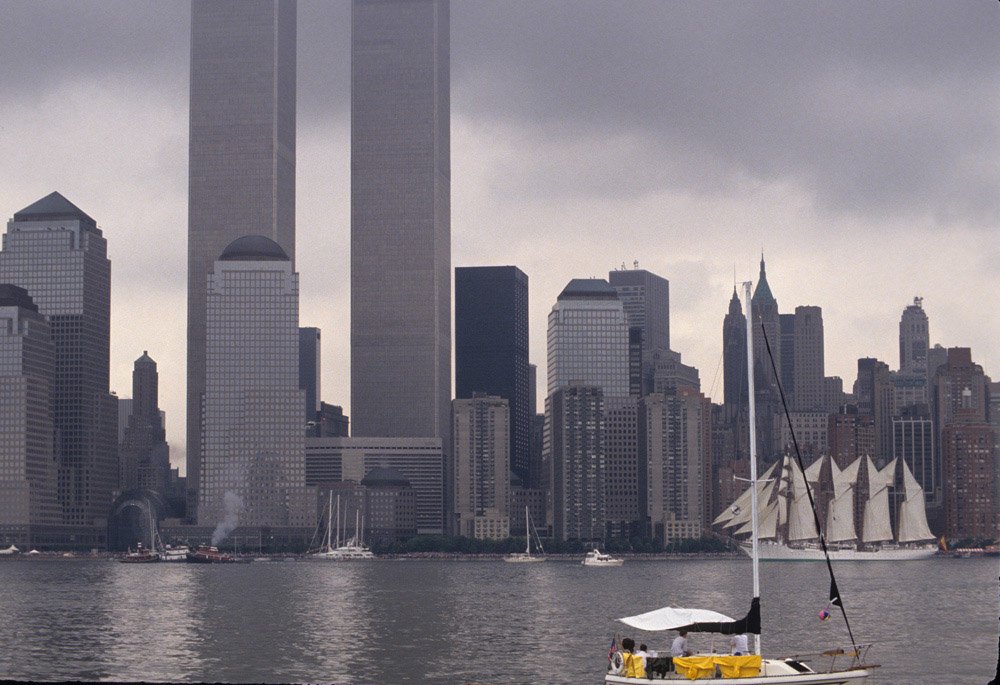
The terrorist attacks of September 11, 2001, permanently changed the city and revealed the extraordinary solidarity of New Yorkers.
Today, New York remains a global center of finance, culture, art, and innovation—a city continually reinventing itself.
There Are as Many New Yorks as There Are People
Everyone who visits New York encounters a different version of it.
Tomorrow, each of us may discover an entirely different New York, because this city is like a chameleon.
There are as many versions of New York as there are residents and visitors. Everyone sees a different city.
Sarah Jessica Parker famously portrayed Carrie Bradshaw, the newspaper columnist in Sex and the City. In the series, New York itself is almost treated as a fifth main character.
Carrie's reflections repeatedly suggest that every resident and visitor experiences a unique version of the city.
Parker, who has lived in Manhattan for decades, has frequently spoken about the city's remarkable diversity of lifestyles, neighborhoods, cultures, and personalities.
There are as many different New Yorks as there are people who live here or visit. The city changes depending on who you are and what you are looking for.
A Short Guide to New York City
1. Times Square
Broadway, Seventh Avenue, and 42nd Street
During the nineteenth century, the area was known as Longacre Square, a center for horse stables, carriage businesses, and blacksmith shops.
In 1904, The New York Times moved into its newly constructed headquarters, the Times Tower. The square was renamed Times Square in recognition of the newspaper's arrival.
The famous New Year's Eve ball-drop tradition began on December 31, 1907, introduced by newspaper publisher Adolph Ochs.
Broadway became known as the Great White Way because of its brilliant electric lights and illuminated theater signs.
The New York Times: Historic and Current Addresses
One Times Square — the newspaper's historic headquarters and the site of the annual New Year's Eve celebration.
620 Eighth Avenue — its modern headquarters, designed by architect Renzo Piano.
More Fascinating Facts About Times Square
Max Neuhaus's sound installation: Near the pedestrian island around 45th and 46th Streets, a mysterious humming sound emerges from beneath the sidewalk. This installation, created in 1977, is a hidden work of public art.
Broadway: Unlike most Manhattan streets, Broadway cuts diagonally across the street grid, creating distinctive intersections and public squares.
The Lincoln Highway: Times Square marks the eastern terminus of this historic transcontinental automobile route.
Illuminated signs: Special zoning regulations help preserve Times Square's famous concentration of bright advertising.
A Walking Route Through Midtown and Central Park
This walk takes us from the heart of Midtown Manhattan along Fifth Avenue, through some of New York's most interesting historical and cultural landmarks, and eventually toward Central Park and the Upper West Side.
Bryant Park and the New York Public Library
From Times Square, walk east toward Fifth Avenue.
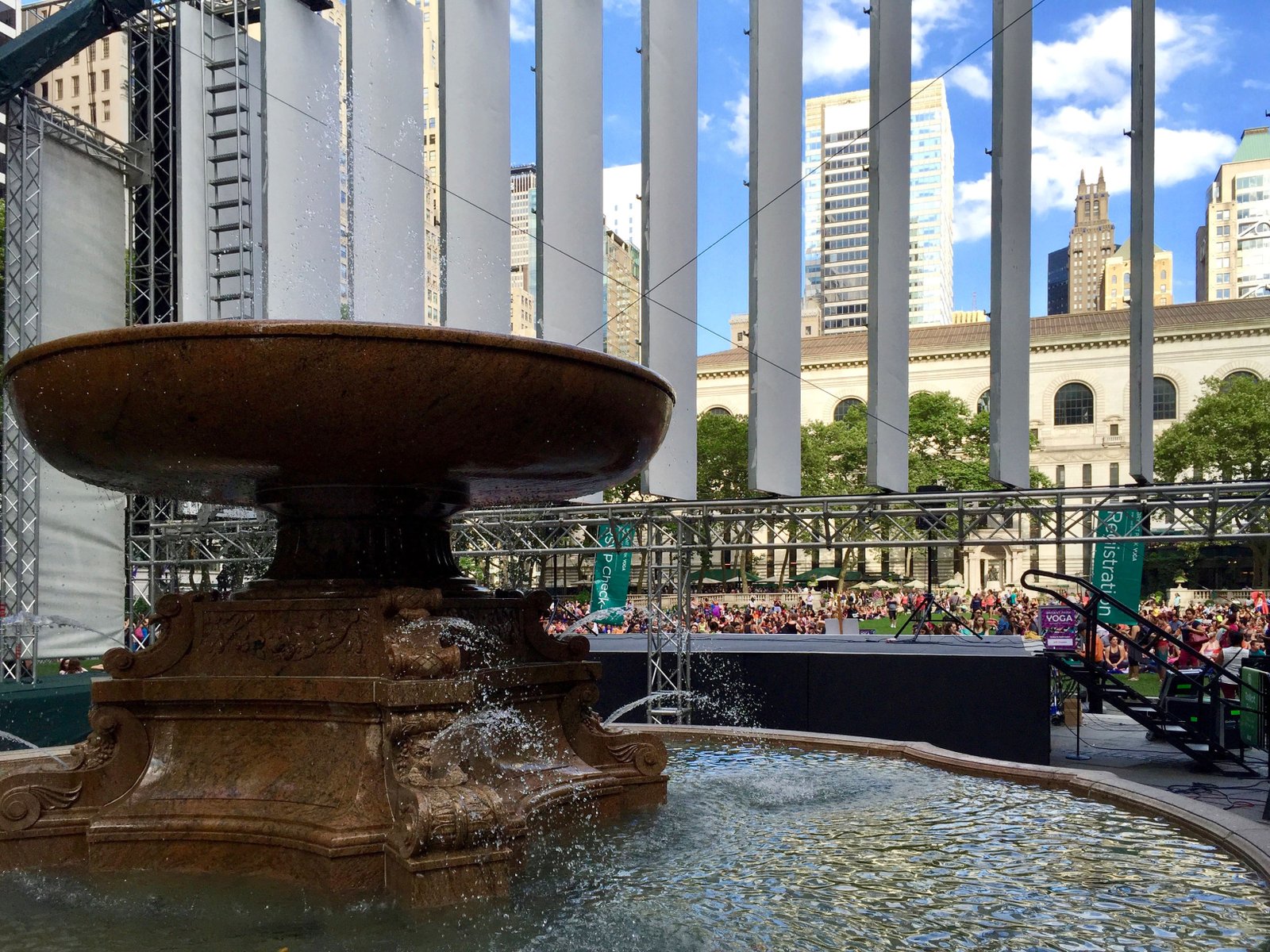
Bryant Park is a remarkable example of how New York transformed a once-troubled public space into a lively urban oasis.
Beside the park stands the magnificent main building of the New York Public Library. Its entrance is guarded by two famous marble lions, named Patience and Fortitude.
The building has appeared in numerous films, including Ghostbusters.
The Diamond District — 47th Street
Continuing north along Fifth Avenue, you will cross 47th Street, one of the world's important diamond-trading centers.
Many businesses here have traditionally been operated by Orthodox Jewish merchants.
Notice the distinctive streetlights designed to resemble cut diamonds.
2. Fifth Avenue and Rockefeller Center
Between 48th and 51st Streets
Rockefeller Center was developed by John D. Rockefeller Jr. during the Great Depression, with construction beginning in 1931.
The project provided employment for thousands of workers and became one of New York's most important centers of business, broadcasting, and entertainment.
The Atlas statue: Across from St. Patrick's Cathedral, notice the monumental bronze sculpture of Atlas carrying the celestial sphere.
Radio City Music Hall and 30 Rockefeller Plaza: At the heart of the complex stands 30 Rockefeller Plaza, historically associated with NBC. Nearby is the legendary Radio City Music Hall.
Around Rockefeller Center
Top of the Rock: Its observation deck offers spectacular views of Central Park and the Empire State Building.
FAO Schwarz: The famous toy store is remembered for its giant floor piano featured in the film Big, starring Tom Hanks.
LEGO flagship store: Another interesting stop, particularly for its elaborate brick-built displays.
3. St. Patrick's Cathedral

Designed by architect James Renwick Jr., St. Patrick's Cathedral is one of New York City's great neo-Gothic landmarks.
Its cornerstone was laid in 1858. Construction was interrupted by the American Civil War, and the cathedral opened in 1879.
Its magnificent spires rise approximately 100 meters above Fifth Avenue.
Between St. Patrick's Cathedral and Central Park
Continuing north, you will pass the legendary Plaza Hotel, featured in Home Alone 2: Lost in New York.
Nearby stands the famous glass-cube entrance to Apple's underground Fifth Avenue store.
At Grand Army Plaza, notice the gilded equestrian statue of General William Tecumseh Sherman.
4. Central Park
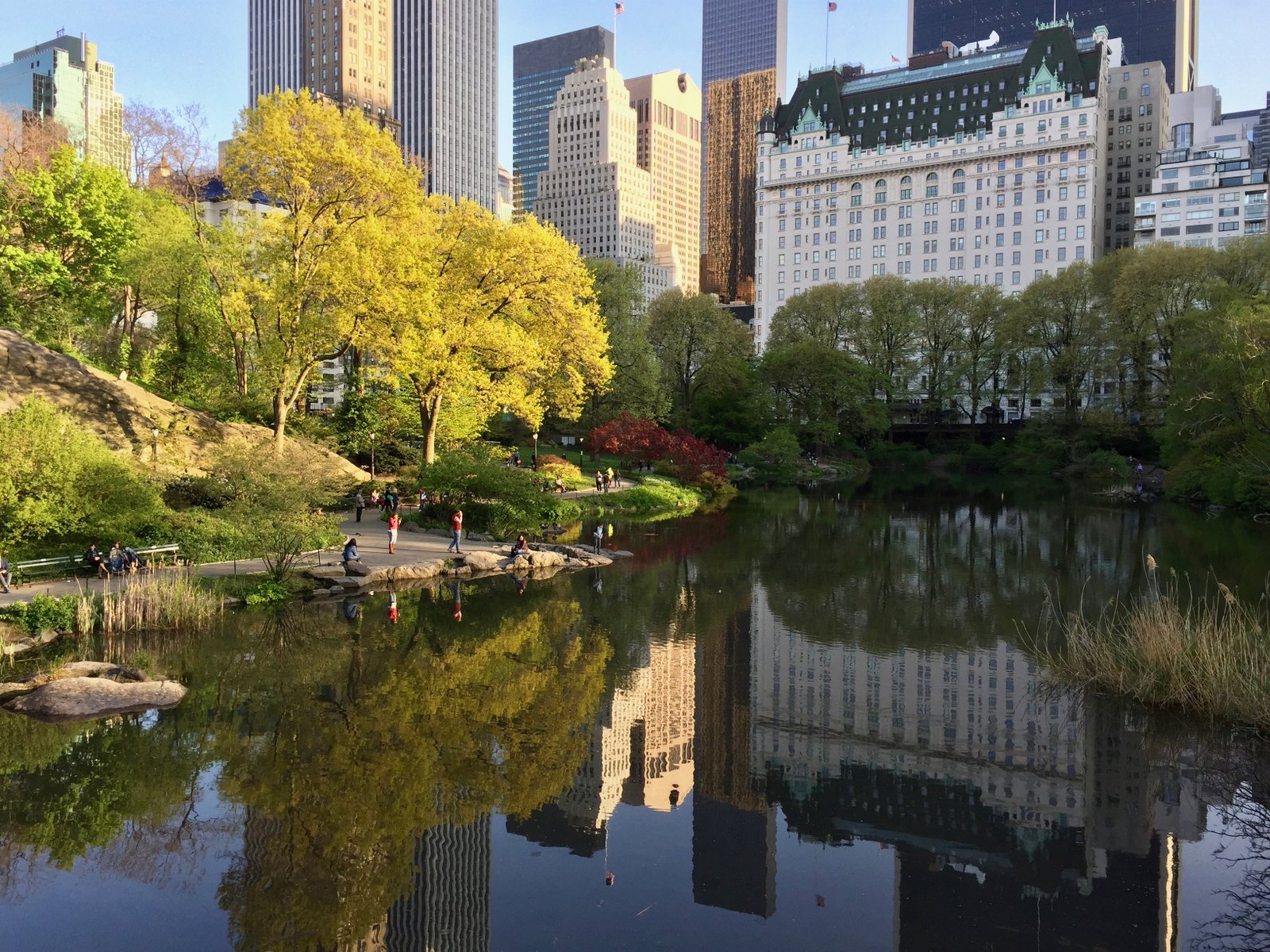
Designed by Frederick Law Olmsted and Calvert Vaux, Central Park covers approximately 843 acres (341 hectares).
Developed beginning in the 1850s, the park was intended to provide green space and fresh air for residents of a rapidly industrializing city.
Almost every feature of this seemingly natural landscape was carefully planned and shaped by human hands.
Walking Through Central Park
The Pond and Wollman Rink: Near the southeastern entrance are the picturesque Pond and the famous skating rink.
The Mall and Bethesda Terrace: A magnificent promenade lined with American elm trees leads toward Bethesda Terrace and the Angel of the Waters fountain.
Strawberry Fields: Near West 72nd Street is the peaceful memorial to John Lennon, with its famous Imagine mosaic.
5. The Dakota Building
Completed in 1884, the Dakota is one of Manhattan's most recognizable residential buildings.
Its name is traditionally associated with the building's once-remote location on the Upper West Side.
Designed by Henry J. Hardenbergh, the building became home to numerous prominent residents.
Its most famous resident was John Lennon, who was murdered outside its entrance in December 1980.
6. Lincoln Center
Lincoln Center was developed during the late 1950s and 1960s as an ambitious cultural complex.
It is home to major institutions including the Metropolitan Opera, New York Philharmonic, and Juilliard School.
But its history also includes a more difficult chapter.
The complex occupies land once belonging to San Juan Hill, a vibrant neighborhood with substantial African American and Puerto Rican communities.
Urban renewal displaced residents and demolished buildings, replacing the neighborhood with the cultural center we know today.
7. The Metropolitan Museum of Art
The Metropolitan Museum of Art, affectionately known as the Met, is one of the world's great art museums.
Founded in 1870, it houses extraordinary collections spanning thousands of years of human history, from ancient civilizations to modern and contemporary art.
Its principal building stands along Fifth Avenue at 82nd Street, overlooking Central Park.
Among its treasures are Egyptian antiquities, European paintings, Greek and Roman sculptures, musical instruments, and works of art from cultures throughout the world.
One of its most remarkable spaces is the Temple of Dendur, an ancient Egyptian temple reconstructed inside a spacious gallery overlooking Central Park.
The museum is far too extensive to explore in a single visit. It rewards returning again and again, each time discovering something previously overlooked.
Official website: metmuseum.org
Ken Burns Documentaries
I call Ken Burns an American treasure.
The 1980s
- Brooklyn Bridge (1981)
- The Shakers: Hands to Work, Hearts to God (1984)
- The Statue of Liberty (1985)
- Huey Long (1985)
- The Congress (1988)
- Thomas Hart Benton (1988)
The 1990s
- The Civil War (1990)
- Empire of the Air: The Men Who Made Radio (1991)
- Baseball (1994)
- The West (1996)
- Thomas Jefferson (1997)
- Lewis and Clark: The Journey of the Corps of Discovery (1997)
- Frank Lloyd Wright (1998)
- Not for Ourselves Alone: The Story of Elizabeth Cady Stanton and Susan B. Anthony (1999)
The 2000s
- Jazz (2001)
- Mark Twain (2001)
- Horatio's Drive: America's First Road Trip (2003)
- Unforgivable Blackness: The Rise and Fall of Jack Johnson (2005)
- The War (2007)
- The National Parks: America's Best Idea (2009)
The 2010s
- The Tenth Inning (2010)
- Prohibition (2011)
- The Dust Bowl (2012)
- The Central Park Five (2012)
- The Address (2014)
- The Roosevelts: An Intimate History (2014)
- Jackie Robinson (2016)
- Defying the Nazis: The Sharps' War (2016)
- The Vietnam War (2017)
- The Mayo Clinic: Faith, Hope, Science (2018)
- Country Music (2019)
The 2020s
- Hemingway (2021)
- Muhammad Ali (2021)
- Benjamin Franklin (2022)
- The U.S. and the Holocaust (2022)
- The American Buffalo (2023)
- Leonardo da Vinci (2024)
- The American Revolution (2025)
Carl Sagan — A New York Boy Who Looked Toward the Universe
Carl Edward Sagan (1934–1996) was born on November 9, 1934, in Brooklyn, New York City.
He became one of the most influential astronomers, planetary scientists, authors, and science communicators of the twentieth century.
Growing up in New York, Sagan developed an early fascination with the stars, the planets, and the mysteries of the universe. What began as a child's curiosity became a lifelong search for understanding.
His extraordinary television series, Cosmos: A Personal Voyage (1980), introduced millions of viewers to astronomy, evolution, the history of science, and the immense scale of the cosmos.
Among his most celebrated books are The Dragons of Eden, Cosmos, and Pale Blue Dot.
The Pale Blue Dot
In 1990, the Voyager 1 spacecraft photographed Earth from a distance of approximately six billion kilometers.
In the resulting image, our entire planet appears as a tiny point of light suspended in the darkness of space.
Sagan used this image to reflect on humanity's conflicts, ambitions, achievements, and extraordinary fragility.
His message was not one of despair, but of humility, compassion, and responsibility.
Everything we have ever known — every civilization, every human life, every triumph and tragedy — has unfolded on this small world.
For Sagan, understanding our place in the universe made life on Earth more precious, not less.
He believed that scientific curiosity and human compassion belonged together, and that knowledge should inspire a greater sense of responsibility toward one another and toward our planet.
Perhaps that is why his vision continues to resonate: he helped us look beyond ourselves while reminding us how much there is to cherish here.
“We are a way for the cosmos to know itself.” — Carl Sagan